The Story Behind the Human First Symbol
What does it mean to be at your best? Those moments when life feels effortless—when you are fully present, confident in your strengths, and accepting of your vulnerabilities. In these moments, we access the full depth of our human potential. Yet, the pressures of life often pull us away from this state.
The Human First logo—a fusion of Da Vinci’s Vitruvian Man and the Zen Enso—symbolises the journey back to balance, back to wholeness, back to ourselves.
Vitruvian Man: The Blueprint of Human Potential
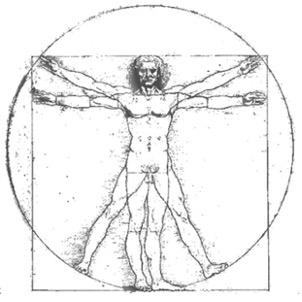
Leonardo da Vinci’s Vitruvian Man is more than a study of proportion—it is a symbol of harmony. It represents the intersection of art and science, mind and body, logic and intuition. It reflects our capacity to hold paradox—to be both rational and emotional, strong and vulnerable, structured and free.
When we are in balance, we embrace the full depth of who we are. We move beyond the need to prove or please, beyond the pressures of achievement or approval. We are simply being.
Yet, many of us struggle to stay in this state. Over time, we learn to favour one side of ourselves over the other. We rely on intellect and dismiss emotion. We project strength and hide vulnerability. We strive forward and forget to be still. And in doing so, we lose connection to our full humanity.
The Enso: The Circle of Wholeness

Surrounding the Vitruvian Man is the Enso, a Zen Buddhist symbol representing wholeness, imperfection, and the beauty of the present moment. Unlike the rigid structures we create in our lives, the Enso is drawn in a single, fluid motion, symbolising acceptance and flow.
The Enso reminds us that we are already whole. We don’t need to earn our worth, prove our value, or achieve more to be enough. It invites us to return to presence—to remember that we were born whole and remain whole, even when we forget.
Why Do We Lose This Connection?
From an early age, we learn to seek validation—either by proving our worth through achievement or pleasing others for acceptance. These patterns shape how we see ourselves and how we move through the world.
- The need to prove drives us into relentless striving, where self-worth becomes tied to success, status, or control.
- The need to please leads us to seek acceptance by prioritising others, often at the expense of our own needs.
Both are intelligent survival strategies—useful in certain moments but limiting when they become rigid, trapping us in patterns of seeking success rather than unlocking fulfilment.
The Human First approach supports the journey back to wholeness—helping us recognise these patterns, not to reject them, but to understand when they serve us and when they hold us back.
The Pathway to Wholeness
The combination of Vitruvian Man and the Enso reflects the essence of the Human First approach. Growth is not about chasing something just out of reach or fixing something that isn’t broken. It is about reconnecting with what was always there.
The Human First approach draws from coaching, therapeutic, and spiritual practices to help us reconnect with our full potential. It acknowledges the paradoxes within us—the need for both strength and vulnerability, knowledge and curiosity, logic and intuition.
Sometimes, we need to unpack the past and heal old wounds. Other times, we need to step forward into new opportunities. Or perhaps, we need to connect with something deeper—a sense of purpose beyond ourselves. True transformation lies in balancing these forces, allowing us to reclaim our full humanity.
This is not about becoming someone new. It is about remembering who we’ve always been.
Beyond any title, role, or expectation – we are Human First.
 Clear view